
Better Late Than Never: DOJ’s National Security Division Resolves First “Near Miss” Self-Disclosure Under Department-wide Corporate Enforcement Policy
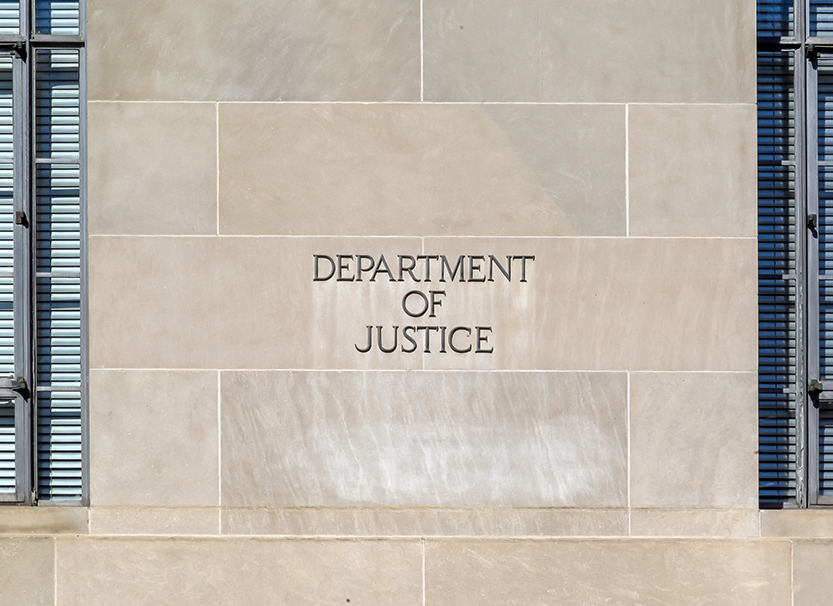
On October 27, 2026, the U.S. Department of Justice (DOJ or the Department) announced that its National Security Division (the NSD) had entered into a non-prosecution agreement (NPA) with Extreme Networks, Inc. (Extreme Networks) to resolve sanctions and export control violations involving sales to a Russian weapons manufacturer. The resolution is the first “near miss” NPA under DOJ’s Department-wide Corporate Enforcement and Voluntary Self-Disclosure Policy (the CEP), and the first resolution under the CEP announced by the NSD. The resolution illustrates how the Department distinguishes between an imperfect self-disclosure, which may still earn substantial credit, and a failure to self-disclose at all.
The Extreme Networks Agreement
According to DOJ, between March 2018 and March 2022, Extreme Networks used a Russia-based subsidiary and a third-party distributor to fulfill purchase orders from Moscow Machinery Building Plant Avangard (MMZA), a weapons manufacturer whose owner has been on the Specially Designated Nationals and Blocked Persons List maintained by the Department of the Treasury’s Office of Foreign Assets Control (OFAC) since July 2014, while concealing MMZA’s role in those sales. Extreme Networks also filed false export information, which impeded enforcement of sanctions and export controls that DOJ described as “designed to protect national security and economic interests.”
DOJ classified the matter as a “near miss” under the second prong of the CEP’s three-part framework. Although Extreme Networks self-disclosed the misconduct, it did so only when a news publication was poised to report on it. Because the disclosure was made under the imminent threat of public disclosure, it did not satisfy the CEP’s requirement that a voluntary self-disclosure be timely.
DOJ nonetheless agreed to resolve the matter through an NPA, citing the absence of aggravating circumstances and the company’s cooperation and remediation, which included:
- Providing relevant facts and documents and making employees available for interviews;
- Terminating its relationship with the third-party distributor used to facilitate the sales;
- Improving screening procedures and hiring additional compliance personnel; and
- Implementing diligence procedures in connection with mergers and acquisitions.
The NPA requires Extreme Networks to forfeit $487,860.92, the proceeds it received from its export misconduct, and pay a $487,860.92 criminal fine. Extreme Networks also agreed to a settlement amount of $1,529,685.00 with OFAC to resolve a parallel action arising out of the same conduct. OFAC considered the case to have been voluntarily self-disclosed and egregious, noting Extreme Networks “acted with reckless disregard for U.S. sanctions when it failed to conduct sufficient due diligence to recognize that MMZA was a blocked person, and when it failed to heed numerous warning signs that MMZA was the ultimate recipient of the goods.” Extreme Networks’ obligation to pay a portion of the OFAC settlement amount was deemed satisfied by its payment of the fine to DOJ, resulting in Extreme Networks being required to pay $1,041,824 pursuant to the settlement agreement with OFAC, which is available here.
The Resolution Demonstrates DOJ’s New CEP in Practice
As discussed in our prior Update, DOJ adopted the Department-wide CEP in March 2026. The CEP establishes three tiers: declinations for companies that voluntarily self-disclose, fully cooperate, timely remediate, and present no aggravating circumstances; “near miss” resolutions where “a company attempted in good faith to self-disclose but either it failed to satisfy DOJ’s technical criteria for voluntary disclosure or aggravating circumstances are present and prosecutors do not recommend declining”; and resolutions for all other companies. Extreme Networks fell within the first branch of the second tier because its disclosure was made in good faith but was not considered timely under the CEP’s criteria.
The resolution suggests that DOJ will apply the timeliness requirement strictly, including the condition that a disclosure precede any “imminent threat of disclosure or government investigation.” Extreme Networks’ resolution contrasts with the July 2026 declination granted to Campus Eye Management, where DOJ identified timely voluntary self-disclosure as a key factor supporting first-tier treatment, as discussed in our prior Update. Taken together, the two resolutions indicate that DOJ is distinguishing between companies that fully satisfy the CEP’s disclosure requirements and those that fall short, while continuing to reward cooperation and remediation in both circumstances.
The resolution also offers insight into how DOJ assesses aggravating circumstances. Although the misconduct involved sanctions and export controls that DOJ characterized as protecting national security, DOJ did not treat the case as aggravated. This is consistent with the CEP’s focus on the circumstances of the misconduct rather than the category of offense. The relevant factors include (i) the nature and seriousness of the offense, (ii) the egregiousness or pervasiveness of the misconduct within the company, (iii) the severity of harm caused, and (iv) corporate recidivism. Accordingly, a national security nexus by itself does not appear to preclude near-miss treatment.
Key Takeaways
- The CEP now governs corporate misconduct across DOJ. Before March 2026, DOJ’s voluntary self-disclosure program was organized under the Criminal Division. DOJ has expanded the CEP to every DOJ component other than the Antitrust Division, and this resolution confirms that the NSD is applying it to sanctions and export control matters. Companies should assess whether their internal reporting and escalation procedures account for potential misconduct across all areas DOJ enforces, recognizing that self-disclosure may earn credit regardless of which component has jurisdiction, while a failure to disclose may result in less favorable treatment.
- Timely disclosure is key. Extreme Networks cooperated and remediated, but its disclosure under threat of media reporting precluded a declination. Companies should ensure that screening, monitoring, and internal reporting mechanisms are designed to surface potential violations early, and should be prepared to evaluate disclosure promptly once misconduct is identified, before third parties, including the press or whistleblowers, bring the matter to light.
- A late disclosure may still be valuable. The near-miss NPA shows that missing a declination does not eliminate the benefits of self-disclosure. Where a company identifies misconduct after the window for a timely disclosure may have closed, it should still consider disclosing promptly, particularly where no aggravating circumstances are present and the company is positioned to cooperate fully and remediate.
The NPA is available here, and the DOJ press release announcing the resolution is available here.
This post is as of the posting date stated above. Sidley Austin LLP assumes no duty to update this post or post about any subsequent developments having a bearing on this post.
Contacts
https://whitecollarwatch.sidley.com/wp-content/uploads/sites/8/2026/06/AdobeStock_330226534.jpeg 606 833 Maura Rezendes http://whitecollarwatch.sidley.com/wp-content/uploads/sites/8/2026/03/sidleyLogo-e1643922598198.png Maura Rezendes2026-11-04 13:25:012026-11-04 13:26:09Better Late Than Never: DOJ’s National Security Division Resolves First “Near Miss” Self-Disclosure Under Department-wide Corporate Enforcement Policy










You might also like
 State Attorneys General Sue to Challenge FinCEN’s Beneficial Ownership Reporting Rule