DOJ’s National Fraud Enforcement Division Issues First Corporate Enforcement Priorities
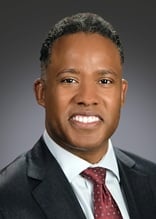
On October 1, 2026, Assistant Attorney General Colin M. McDonald issued “Corporate Enforcement in the Fight Against Fraud” (the “Directive”),[1] which sets out the corporate enforcement strategy of the recently established National Fraud Enforcement Division (the “Fraud Division”) and directs its prosecutors to pursue an “aggressive, all-tools approach” to the Fraud Division’s health care, government, tax, and trade fraud priorities. The Directive offers an early look at how the Fraud Division will evaluate corporate matters, including concrete thresholds for duration, geographic scope, number of victims, and loss. For companies in the Fraud Division’s priority sectors, the Directive could shape how investigations are opened, staffed, and resolved.
The Fraud Division’s Corporate Enforcement Strategy
What’s the same: The Fraud Division will continue to apply the Principles of Federal Prosecution of Business Organizations (Justice Manual § 9-28.000) and the Department-wide Corporate Enforcement and Voluntary Self-Disclosure Policy (the “CEP”), as the Directive requires prosecutors to be familiar with both before opening or joining any corporate investigation. The Directive frames corporate liability in familiar terms: companies are prosecuted where wrongdoing is serious and pervasive and a company’s compliance policies, internal controls, and history of misconduct, among other factors, show that it caused or encouraged the offense. The Directive also states that the strategy is designed to provide transparency to stakeholders, appropriately incentivize the disclosure of misconduct, reward those who cooperate with the government, hold individuals and corporate criminals accountable, and promote the recovery of fraudulent proceeds.
What’s new: The Directive articulates a Fraud Division-specific strategy built around four components: (i) involvement of the Fraud Division’s Corporate Enforcement Section (“CES”) in corporate matters; (ii) four investigative priorities; (iii) ten factors on which prosecutors “must place great weight”; and (iv) policies to incentivize whistleblower disclosures. We discuss each below.
- Corporate Enforcement Section Involvement.
The Directive requires Fraud Division prosecutors to work closely with CES at all phases of corporate investigations, from case intake through resolution or litigation. The Criminal Division’s Fraud Section, which preceded the Fraud Division, followed a similar practice, and the Directive now makes it a formal requirement. The Directive sets three concrete requirements:
- Within seven days of the Directive’s issuance, Fraud Division prosecutors must report any ongoing corporate investigation to the Chief of CES.
- CES must be promptly notified of any new corporate investigations and major developments in existing corporate cases and will participate as necessary and appropriate to ensure adequate resourcing and compliance with Department policy.
- CES will assume primary responsibility for evaluating a company’s compliance with the terms of any corporate criminal resolution, including its efforts to enhance its compliance program and fulfill its reporting obligations, freeing the prosecuting sections to pursue new cases.
These requirements do not extend to cases assigned to a District Fraud Counsel by a U.S. Attorney’s Office that are not also supervised by the Fraud Division, although CES is available to assist U.S. Attorneys’ Offices on fraud matters where helpful to the Department’s overall mission. Put differently, a less centralized approach to corporate matters may continue in U.S. Attorneys’ Offices.
- Investigative Priorities.
The Directive also instructs Fraud Division prosecutors to prioritize corporate fraud involving:
- The health care industry, including health care fraud, controlled substance distribution, and Food, Drug, and Cosmetic Act violations;
- The public trust or the financial integrity of Americans and markets, including procurement, government contracts, and other government functions;
- Significant evasion of internal or external revenue; and
- Tariff evasion, importation of goods or services, or forced labor.
This is notable because it tracks speculation that market integrity cases will move from the Criminal Division to the Fraud Division. The other subject areas listed above have been under the Fraud Division since April 2026.[2]
- Ten “Great Weight” Factors.
In deciding whether to bring charges and in negotiating plea or other agreements, Fraud Division personnel must place “great weight” on:
- Knowledge of or involvement in the fraud scheme by corporate management;
- Efforts to conceal fraud from government agencies or auditors, or otherwise to impede a government function or oversight;
- Conduct furthering the scheme lasting three years or more;
- Actions threatening the safety or security of Americans, including military readiness;
- Conduct causing substantial financial hardship to a taxpayer-funded program or government function;
- Conduct affecting multiple taxpayer-funded programs or government functions;
- Conduct affecting three or more federal districts;
- Conduct resulting in financial harm to 25 or more victims, or $25 million or more in losses;
- Conduct involving the exfiltration of U.S. dollars to support foreign adversaries; and
- Conduct involving immigration offenses.
The list is non-exhaustive. Prosecutors may weigh any other relevant factor consistent with the Justice Manual and must in all cases apply the CEP.
- Whistleblowers
The Directive also instructs Fraud Division leadership, in consultation with law enforcement partners, to design and implement policies and programs that incentivize whistleblowers to bring forward credible information pertaining to fraud and “provide the public with transparency to the extent possible.” Those policies and programs should be designed to “uncover criminal conduct, strengthen ongoing investigations, help prevent fraud losses, and enable the Department to effectively respond to both latent and emerging criminal fraud threats.” They must also encourage and protect disclosures by whistleblowers, including those who participated in the criminal conduct.
The Fraud Division says it is already generating leads “at a rapid pace” through the National Fraud Detection Center and data analytics, and the Department has historically relied on “honest brokers” willing to share information even when they share culpability for the misconduct. This further suggests that DOJ remains committed to increasing incentives for whistleblowers to report—as Sidley has recently discussed here and here.
Key Takeaways
- Consider the ten factors now. Health care companies, government contractors and grantees, importers, and companies with tax-sensitive positions should assess whether known or potential issues, including those already under investigation, implicate the Directive’s duration, geographic, victim, or loss factors. Because the list is non-exhaustive, that review should not stop at the numerical thresholds. Companies should also consider the enforcement priorities reflected by the factors: management involvement, concealment, harm to taxpayer-funded programs, and threats to national security.
- Keep the CEP factors at the center of any analysis. The Directive does not displace the CEP; it highlights facts that may weigh heavily when prosecutors apply it. The Directive identifies aggravating factors most likely to prevent a favorable resolution—management knowledge, concealment from agencies or auditors, and multi-year duration. Internal investigations should prioritize establishing early whether those facts exist to inform both the disclosure decision and the company’s negotiating posture.
- Expect CES participation early in the process. In matters within the Fraud Division’s area of supervision, companies should anticipate CES involvement from case intake through resolution or litigation. This continues the model of the Criminal Division Fraud Section’s compliance team, which is not surprising given that CES prosecutors came from the Fraud Section.
- Look for implementation and adapt compliance programs accordingly. Counsel should monitor how prosecutors apply the victim and loss thresholds, how the seven day reporting requirement affects pending matters, and what form the Fraud Division’s whistleblower policies and programs take. Prosecutors may be looking to hold corporations responsible for misconduct by third parties, such as a prime contractor for a subcontractor or a health care company for a vendor. As always, companies will be well served by updating their compliance programs on an ongoing basis to address evolving risks.
Directive 26-12 is available on the DOJ website here.
[1] Memorandum from Colin M. McDonald, Assistant Att’y Gen., Nat’l Fraud Enf’t Div., to All Fraud Division Personnel, Directive 26-12: Corporate Enforcement in the Fight Against Fraud (Oct. 1, 2026), https://www.justice.gov/opa/media/1463571/dl?inline.
[2] Memorandum from Todd Blanche, Acting Att’y Gen., to the Dep’t of Justice, Creation of the National Fraud Enforcement Division, at 2 (Apr. 7, 2026), https://www.justice.gov/ag/media/1435311/dl?inline.
This post is as of the posting date stated above. Sidley Austin LLP assumes no duty to update this post or post about any subsequent developments having a bearing on this post.