DOJ Renames Criminal Division’s Fraud Section as the “White Collar and Corporate Enforcement” Section
On August 10, 2026, the U.S. Department of Justice (DOJ) announced that the Criminal Division’s longstanding Fraud Section has been renamed the White Collar and Corporate Enforcement Section. The change follows the creation of the National Fraud Enforcement Division, which absorbed more than half of the legacy Fraud Section’s personnel and its longstanding mandate to combat fraud against government programs.
The renaming marks a notable development for a Section that has played a central role in DOJ’s corporate and financial crime enforcement for decades. The Section’s roots date to the World War II-era “War Frauds Unit,” and its prosecutors have since handled significant matters involving securities and commodities fraud, health care fraud, foreign bribery, market manipulation, and other complex economic crimes.
The key question is whether the new name reflects a rebranding or signals broader changes in DOJ’s white collar enforcement strategy. Click here to read the full post.





DOJ (Re-)Expands Northeast Health Care Fraud Strike Force to Philadelphia and Charges 19 Defendants in Medicaid Home Care Schemes
On August 4, 2026, DOJ’s National Fraud Enforcement Division (“Fraud Division”) announced a significant expansion of its Northeast Health Care Fraud Strike Force into Philadelphia. The expansion will reunite the Fraud Division’s Health Care Fraud Section with the U.S. Attorney’s Office for the Eastern District of Pennsylvania; in 2018, the same teams launched what was then known as the Philadelphia-Newark Regional Strike Force, before reducing its operations to Newark-only in more recent years. Nationally, since its inception in 2007, the Health Care Fraud Strike Force program has been responsible for prosecuting more than 6,200 defendants who collectively billed federal health care programs and private insurers more than $45 billion.


DOJ Loosens the Whistleblower Program’s Bar on “Other Program” Claimants in Latest Revision
On July 30, 2026, the U.S. Department of Justice (DOJ) revised its Corporate Whistleblower Awards Pilot Program, expanding the pool of individuals who may qualify for an award. Most notably, DOJ eliminated the prior rule that automatically disqualified whistleblowers who could have been eligible for an award under another U.S. government whistleblower program, such as those administered by the SEC or CFTC. Instead, a whistleblower is now disqualified only if he or she actually receives an award from another program for reporting the same or substantially the same misconduct, while DOJ retains discretion to reduce or deny duplicative awards.
The revised guidance also includes several administrative updates, including confirmation that the program is now administered by the Criminal Division’s Money Laundering, Narcotics, and Forfeiture Section (formerly the Money Laundering and Asset Recovery Section) and that submissions will be made through a dedicated online intake portal. The covered subject-matter areas remain unchanged from the May 2025 expansion and continue to include, among other areas, financial institution crimes, bribery, healthcare fraud, trade and customs fraud, procurement fraud, immigration offenses, and sanctions-related misconduct.
For companies, the revisions further strengthen incentives for whistleblowers to report directly to DOJ, including in matters that may also be eligible for other agency whistleblower programs. At the same time, DOJ’s Corporate Enforcement and Voluntary Self-Disclosure Policy continues to provide a pathway to a declination for companies that promptly self-disclose, cooperate, and remediate misconduct, reinforcing the importance of effective internal reporting mechanisms and careful consideration of self-disclosure decisions in the face of potential whistleblower reports. Click here to read the full post.



DOJ Grants First Healthcare Declination Under New Corporate Enforcement Policy While Indicting Founder
On July 29, 2026, the Department of Justice (“DOJ”) announced that, consistent with Part I of DOJ’s Department-wide Corporate Enforcement and Voluntary Self-Disclosure Policy (“CEP”), it declined to prosecute Campus Eye Management Holdings LLC and its wholly owned subsidiary, Campus Eye Management LLC (collectively, “Campus Eye”), a management services organization that provided billing and other services to an optometry practice and ambulatory surgery center. DOJ had been investigating Campus Eye for alleged healthcare fraud, including illegal kickbacks. This is the first declination involving a healthcare company under the new, Department-wide CEP. And it is only the second healthcare fraud declination under any voluntary self-disclosure policy in DOJ history—the first being the HealthSun Health Plans, Inc. matter handled by the same team (i.e., the Health Care Fraud Unit) when they were part of the Criminal Division’s Fraud Section, prior to creation of the National Fraud Enforcement Division (“NFED”) earlier this year. Click here to read the full blog post.
DOJ Expands Trade Fraud Enforcement After $1 Billion Milestone
The U.S. Department of Justice and the Department of Homeland Security announced on July 14, 2026, that the Trade Fraud Task Force had surpassed $1 billion in criminal and civil recoveries, penalties, forfeitures, and publicly charged losses less than one year after its launch. The announcement confirms a fundamental shift in the federal government’s approach to customs and trade enforcement, reflecting increased emphasis on rigorous criminal prosecution and civil enforcement under the False Claims Act.




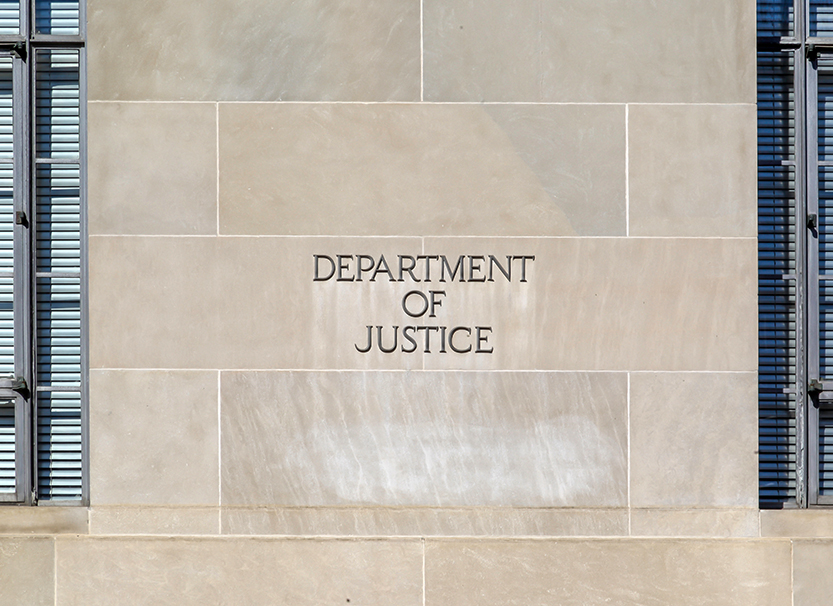
DOJ Ends 15-Year-Old Economic Espionage Case—With Prejudice
In a surprising development, on July 13, 2026, the U.S. Department of Justice dismissed with prejudice its landmark economic espionage prosecution against Pangang Group Company, Ltd. and its subsidiaries—a Chinese state-owned enterprise accused of stealing DuPont trade secrets for the benefit of the Chinese government. The dismissal came just one week after trial began, bringing to an end one of the longest-running and most consequential prosecutions under the Economic Espionage Act.
Although the case itself is over, its legal legacy remains. Over more than a decade of litigation, the prosecution produced significant rulings on service of process, foreign sovereign immunity, and the treatment of foreign state-owned enterprises under the Economic Espionage Act and the Foreign Sovereign Immunities Act. Those decisions, together with amendments to Federal Rule of Criminal Procedure 4 prompted by the litigation, will continue to shape future prosecutions.



DOJ’s 2026 Health Care Fraud Takedown Highlights Increased Coordination and Data-Driven Enforcement
This week, DOJ announced the results of its 2026 National Health Care Fraud Takedown, which involved charges against 455 defendants, including 90 medical professionals, in connection with alleged schemes involving more than $6.5 billion in false claims submitted to Medicare, Medicaid, and other federal health care programs. The Takedown involved the participation of 50 state Medicaid Fraud Control Units and included cases in 56 federal districts and 45 U.S. states and territories.

June Antitrust and Competition Bulletin: Top-of-Mind Global Antitrust Issues
Recent antitrust developments offer important insights into evolving enforcement priorities on both sides of the Atlantic. This month’s roundup examines the appointment of Stanley Woodward to assume authority to act as Assistant Attorney General for the DOJ Antitrust Division, a leadership change that could influence the Division’s enforcement approach and decision making in the near term. The post also discusses the European Commission’s continued scrutiny of coordination among competitors through minority shareholdings, signaling ongoing concern with information sharing, governance rights, and other conduct that may facilitate anti-competitive behavior.
The update further explores the FTC’s views on merger remedies, recent healthcare merger enforcement actions, and growing regulatory attention to modern pricing practices. Read the full post for key takeaways on the latest antitrust enforcement trends and the compliance considerations they present for businesses.