D.C. U.S. Attorney’s Office Announces Creation of Standalone Division Focused on False Claims Act Enforcement
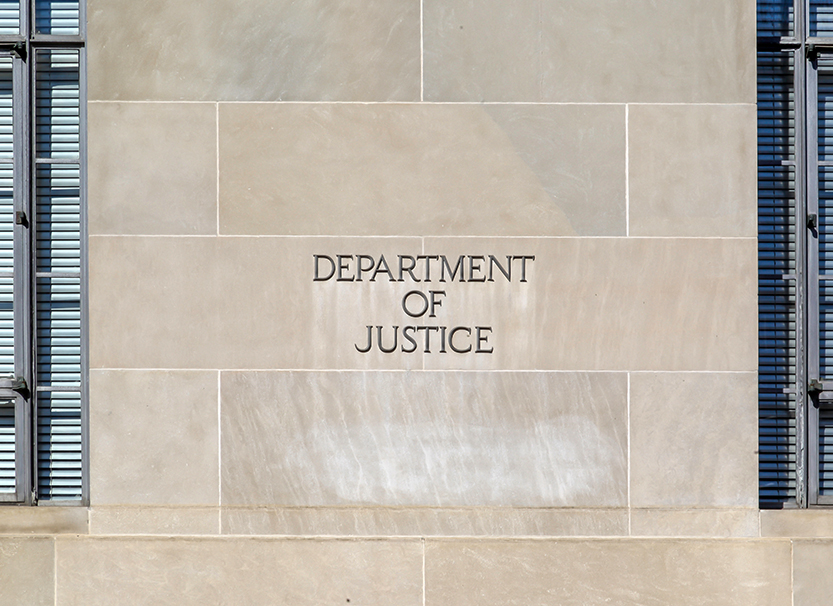
On September 23, 2026, Jeanine Pirro, the U.S. Attorney for the District of Columbia, announced the creation of a new Fraud and Asset Recovery Division. The new Division will be dedicated to investigating and pursuing fraud against the federal government with a “particular focus” on the False Claims Act (“FCA”). This represents a significant reorganization—and expansion—of that Office’s affirmative civil enforcement capacity.





DOJ’s Civil Rights Fraud Initiative Raises False Claims Act Risks for Healthcare and Life Sciences Companies
In a Reuters article, Sidley partners Jaime Jones, Kristin Graham Koehler and Boyd Greene examine how the U.S. Department of Justice’s Civil Rights Fraud Initiative could create new False Claims Act (FCA) exposure for healthcare and life sciences companies that receive federal funding or contract with the federal government. The initiative seeks to use the FCA to pursue organizations that allegedly violate federal civil rights laws while certifying compliance with contractual, grant or funding requirements.

DOJ Announces Accelerated Review of FCA Qui Tams Alleging Fraud Against State-Administered Benefits Programs
It is not business as usual at DOJ. In the latest announcement related to the Department’s efforts to fight alleged fraud, on May 27, 2026, Assistant Attorney General Brett Shumate issued a memorandum directing DOJ’s Civil Division and U.S. Attorneys’ Offices to accelerate the review of qui tams alleging fraud against federally funded state-administered benefits programs, including programs involving housing, food assistance, medical care, and cash assistance. The memorandum, titled “Accelerating Review and Enhancing Enforcement in Benefits Fraud Matters,” implements President Trump’s March 2026 Executive Order establishing the “Task Force to Eliminate Fraud,” which we reported on here, and which directed the Department to take appropriate action to promote “meritorious” qui tams and to complete investigations sooner, including within the 60-day statutory period.
DOJ and Texas AG Announce First Settlement in National Investigation of Gender-Affirming Care for Minors
On May 15, 2026, the U.S. Department of Justice and the Texas Attorney General announced the first publicly disclosed settlement arising from the federal government’s nationwide investigation into gender-affirming care for minors. The resolution with Texas Children’s Hospital reflects a coordinated federal-state enforcement approach grounded in False Claims Act (“FCA”) and Federal Food, Drug, and Cosmetic Act (“FDCA”) theories, alongside significant non-monetary remedies extending beyond traditional healthcare fraud settlements. In addition to a substantial monetary payment, the agreements impose operational, clinical, and governance-related obligations that may signal how enforcement authorities intend to pursue similar matters going forward.
This blog post examines the settlement terms, the broader federal policy and enforcement framework underlying the investigation, and the implications for healthcare providers and life sciences companies navigating areas of aligned federal and state enforcement focus. Click to read more about the resolution and what it may signal for future DOJ and state attorney general enforcement activity.




Supreme Court’s First Choice Decision May Expand Federal Court Options to Recipients of State Attorney General CIDs
The U.S. Supreme Court’s recent decision in First Choice Women’s Resource Centers, Inc. v. Davenport may create a new strategic consideration for recipients of state attorney general civil investigative demands (CIDs). In a unanimous opinion, the Court held that a nonprofit could pursue a Section 1983 challenge to a New Jersey Attorney General subpoena in federal court based on alleged First Amendment associational harms arising from compelled donor disclosure.
Although the Court emphasized the narrow nature of its holding, the decision potentially opens the door to federal court challenges where state attorney general CIDs implicate donor anonymity, expressive association, advocacy activities, or other constitutional interests. The ruling also reflects the Court’s continued willingness to recognize Article III standing based on alleged chilling effects tied to First Amendment rights.
Our latest post examines the decision, the arguments raised by a coalition of state attorneys general, and what the ruling may mean for companies, nonprofits, trade associations, and other recipients of state attorney general investigative demands.


U.S. DOJ Civil Division to Investigate Possible Violations of the Food, Drug, and Cosmetic Act by Pharmaceutical Firms Manufacturing Drugs Used in Gender Transition Care
On June 11, 2025, the U.S. Department of Justice (DOJ) Civil Division issued a memorandum outlining five Trump administration policy objectives and “direct[ing] Civil Division attorneys to prioritize investigations and enforcement actions advancing these priorities.”1 The memorandum is signed by Assistant Attorney General Brett A. Shumate, who was confirmed by the Senate two days earlier, on June 9, 2025.2 One of the five policy objectives, entitled “Protecting Women and Children,” has potentially significant enforcement implications for pharmaceutical companies whose drugs may be used in gender transition care — even if they are used off-label.