DOJ Renames Criminal Division’s Fraud Section as the “White Collar and Corporate Enforcement” Section
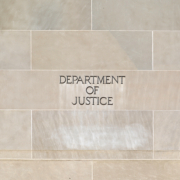
On August 10, 2026, the U.S. Department of Justice (DOJ) quietly announced that the Criminal Division’s Fraud Section has been renamed the White Collar and Corporate Enforcement Section. According to DOJ, the change is intended to align the Section with the White House-driven creation of the National Fraud Enforcement Division, which absorbed more than half of the legacy Fraud Section’s personnel and one of its longest-standing mandates: combating fraud against government programs.
The Attorney General and the Deputy Attorney General oversee the Department’s U.S. Attorneys and Assistant Attorney Generals and set national enforcement priorities. DOJ’s “Main Justice” components—generally organized by subject-matter and based largely in Washington, D.C.—have missions that overlap to some degree with the jurisdiction of the U.S. Attorneys’ Offices but remain institutionally distinct, with separate resources and leadership under Senate-confirmed Assistant Attorney Generals. By contrast, the 93 U.S. Attorneys’ Offices may, subject to applicable approvals and other requirements in DOJ’s Justice Manual, prosecute all federal criminal offenses for which venue properly lies in their respective districts. This of course includes white collar offenses, of which fraud offenses are a subset. In recent decades, U.S. Attorneys’ Offices have also frequently partnered with Main Justice lawyers on significant and complex matters.
DOJ has a long history of creating and deploying specialized teams with relevant expertise to address significant federal criminal threats facing the nation. The foundation of the Criminal Division’s Fraud Section predates passage of the federal wire fraud statute in 1952. A group initially known as the “War Frauds Unit,” specially set up in 1942 by the Attorney General to prosecute all cases involving fraud on the government in its war efforts, evolved in peacetime into the Fraud Section.[1] The Section was formally established within the Criminal Division in 1955 and early in its history, John Christopher “Jack” Keeney—a World War II pilot and former German prisoner of war—served as one of its inaugural Chiefs.[2] Expanding over the years but in particular from the 2000s onward, the Fraud Section has been at the center of many of DOJ’s most significant corporate and financial crime prosecutions. Its prosecutors have handled matters involving securities and commodities fraud, health care fraud, foreign bribery, market manipulation, and other complex economic crimes.
The renaming comes as DOJ continues to reorganize its approach to fraud enforcement around the National Fraud Enforcement Division. That new Division now appears to be taking the front seat with respect to press announcements, national coordination efforts, and resources devoted to government program fraud.
It will be worth watching whether the new name is merely a re-branding or signals further changes to the Section’s mission, priorities, or role within DOJ’s broader fraud enforcement strategy. While “fraud” has been removed from the Section’s name, the Criminal Division has emphasized that the Section will continue to prosecute “private fraud” matters, including insider trading, online scams, and securities offenses, as well as foreign bribery and FDCA-related offenses.
[1] https://www.justice.gov/criminal/history/historical-timeline
[2] Keeney became one of the longest-tenured career prosecutors in U.S. history, retiring in 2010 at age 88. Following his death, DOJ created a memorial award in his honor to recognize annually an employee who has demonstrated exceptional integrity and professionalism over a sustained period or an employee who has displayed extraordinary strength of character in a unique situation.
This post is as of the posting date stated above. Sidley Austin LLP assumes no duty to update this post or post about any subsequent developments having a bearing on this post.